
Grief is like Pizza
by Arielle Arbushites
Some days it’s comforting, some days it makes you feel sick. I’m talking about pizza. And grief of course.
We treat grief like a rare condition, something that happens to other people, somewhere else, at a distance we can manage.
But grief is not rare. It is not exceptional. And it is not reserved for the unlucky.
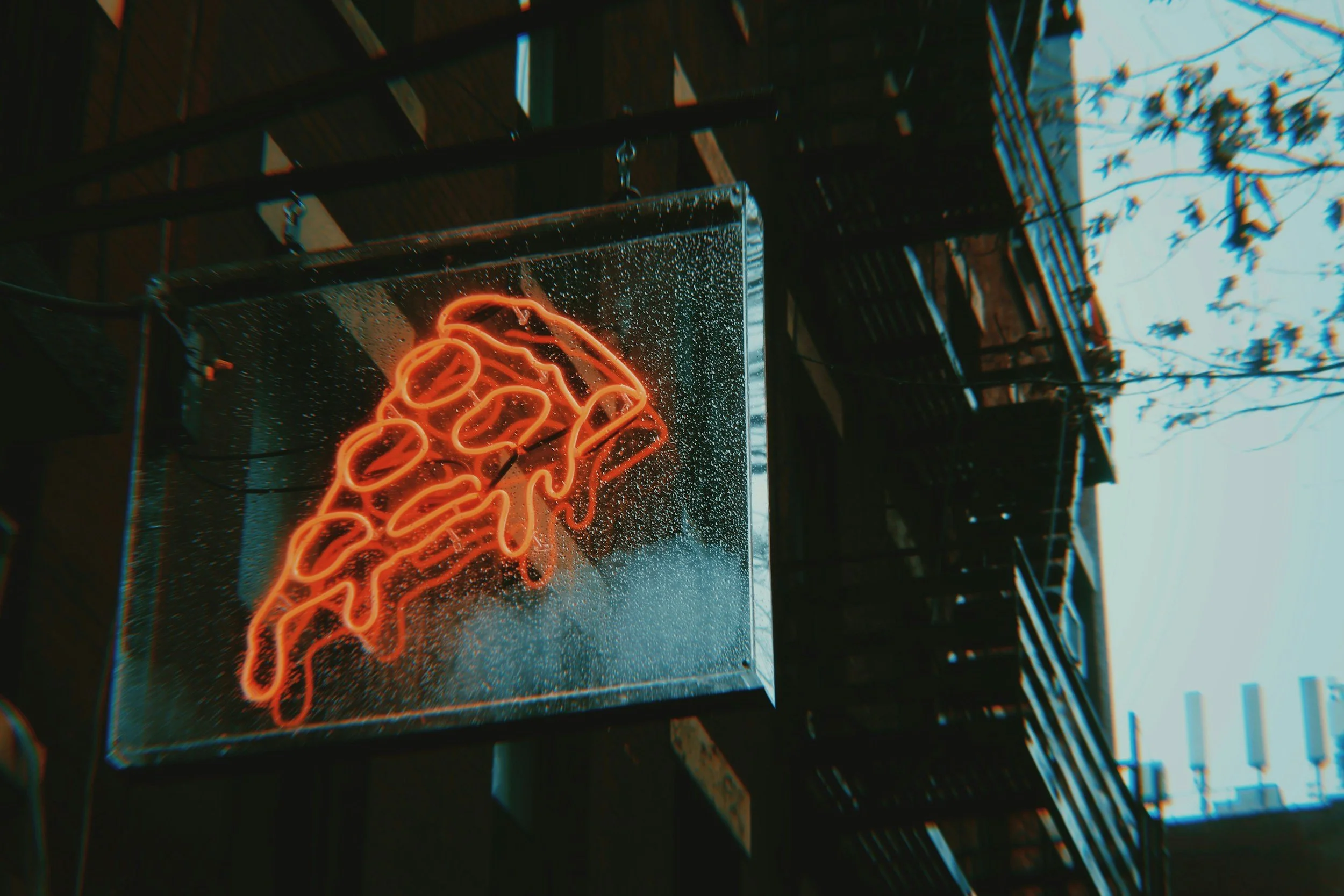
It is as common as pizza.
Everyone has a relationship to it. Some people welcome it to the table, speak its name, learn its shape.
Everyone has a relationship to it. Some people welcome it to the table, speak its name, learn its shape.
Others avoid it, pretend it isn’t there, even as it sits—cooling, waiting—within arm’s reach.
There are a thousand variations of grief, and none of them are wrong. There is no right and wrong in grief.
And yet, we treat it like something that should only be handled in private, behind closed doors, in hushed tones—something to “get through” as quickly as possible so we can return to whatever we were doing before.
But what if we didn’t?
What if we treated grief the way we treat pizza?
What if we expected it? A delivery at the door. Or a table for two (or five!). Or a whole damn party. (You remember pizza parties, right? Getting together in solidarity to celebrate some moment of just being humans.)
What if we just made room for it in our everyday lives, instead of only acknowledging it in moments of crisis?
What if someone could say, “I’m not okay today,” and it landed as normally as, “I’m staying in tonight and ordering pizza because I don’t feel like cooking” ?
What if we understood that grief doesn’t need to be fixed, explained, or rushed? That sometimes it just needs to be sat with quietly, together.
We build entire cultures and rituals around food. We gather, we pause, we connect, we nourish.
But grief, something just as universal, just as human, just as inevitable, we exile.
We make people carry it alone. And then we wonder why they feel isolated.
Grief is not an interruption of life. It is part of it. It deserves a seat at the table, not as a spectacle, not as a problem to solve, but as something we learn to live alongside.
Something we pass gently between us like a slice of pizza.
