Common-unity
as Society’s need for community dies, individuals are dying for community
Some leaps we take without knowing where we will land. Guided by our intuition from a place of raw trust rather than following carefully charted maps.
This could be said for me, anyway. One month ago when I uprooted my life and moved across the world – to a place I’d never been – for a job with no real description. Created only after a serendipitously timed email and a subsequent WhatsApp video chat where everything fell into place.
‘Spontaneity’ isn’t usually in the pool of adjectives I use on myself, but this felt like controlled chaos. I was already visualizing my new life in Southeast Asia. Carefully designing a new format for my days that would optimize the abundance of time I would soon have for the first time. The rituals I’d have, the routines I’d fall into, new goals. All decided before stepping foot out of the States.
My ambition was undermined by not only the learning curve of a new job, but that of a new country, new culture, new language. Big surprise. The days began to fly by without me picking up any of the new lifestyle habits I was desperate to get started on just a few weeks ago. My productivity-oriented mind processed this as complacency. As if I would unravel at the seams if I loosened my grip on the plan, or deviated from the carefully curated timeline I set for myself.
Instead of time opening up spaciously before me like a blank page as I thought it would, each day presents a new, vibrant scene already colored in and just waiting for my brush to stroke, filling in the details. As each day leads to new people and experiences, realization is hitting. I am starting to figure out what it is I actually need.
Spoiler: it isn’t more structure, writing quotas, or to-do lists. It’s something everyone here already seems to have. Something we lack in much of western society.
Community.
I inadvertently took the conditioning and ideals from modern day western society with me when I moved. The idea that in order to prioritize myself, I need to neglect my social needs. Third on Maslow’s hierarchy, the need for belonging somehow pushed to the wayside in the ultra-convenient, digital world we live in. Optimizing time and productivity is becoming isolating as we opt for services like laundry and grocery deliveries. Tipping someone without exchanging more than three words is becoming the norm, while casual run-ins in Isle 4: Baked Goods of the local grocer are becoming a thing of the past.
Also from A Good Life is Inconvenient,
“What really threatens community… [is] hyper-individualism. The myth of self-sufficiency has taught us that to need others is to be weak. That boundaries must always come before repair. That asking for help is embarrassing. That emotional discomfort is a sign something’s wrong, rather than a normal part of being in relationship,”
— Israa Nasir
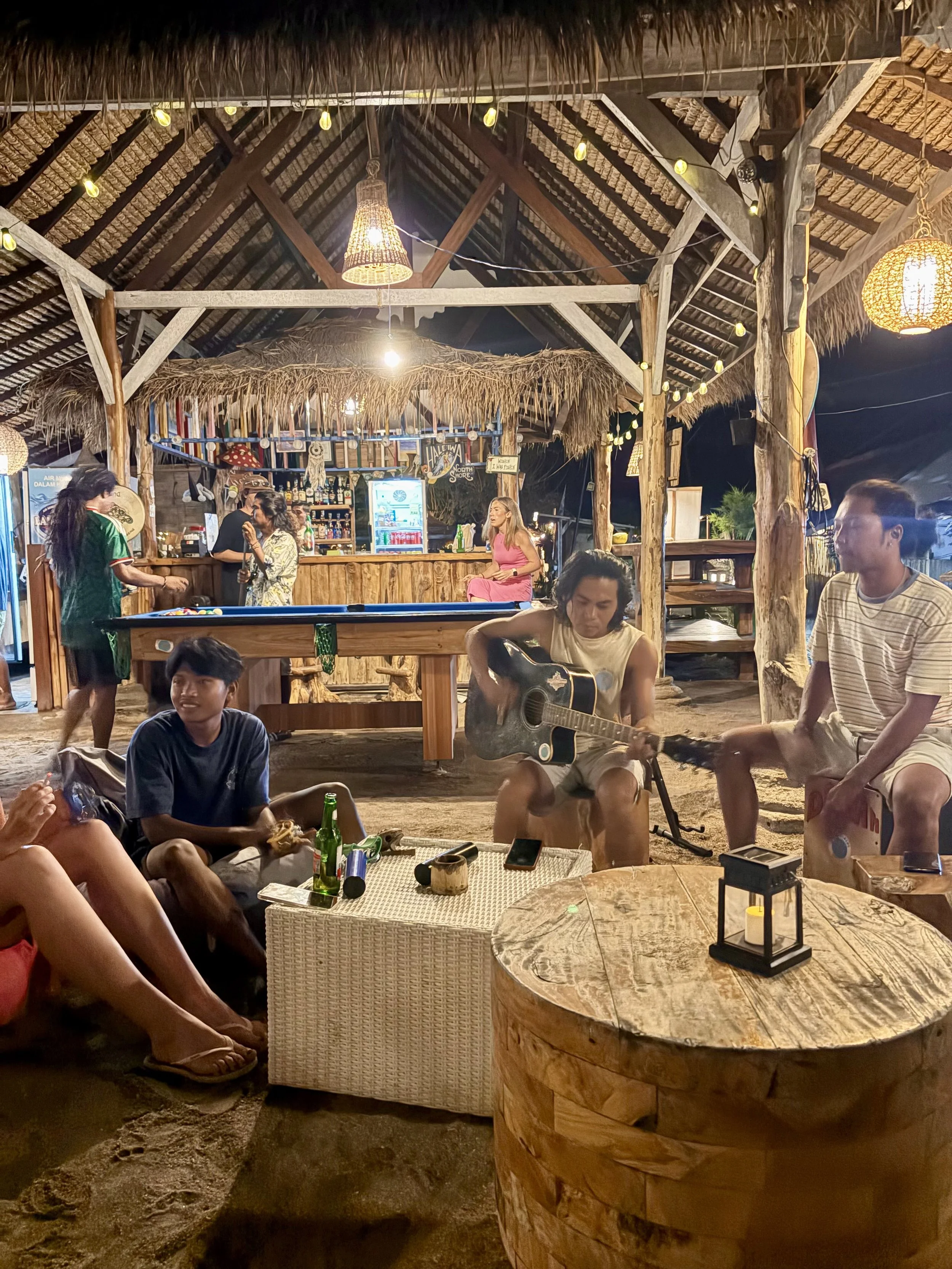
Dream Maker’s, Gili Air
On this island, a quick hello can easily turn into a three hour conversation, never deprived of meaning and depth. Hours pass singing around a circle, learning new chords, teaching each other new songs, laughing. Connection on the purest of levels.
I’ll admit, upon my first few drawn out encounters, I felt trapped. My skin would itch, my leg would tap. My eyes would dart in the direction I wanted to go. Where I was trying to go exactly was unclear. Especially because it’s often through these connections and conversations that inspiration is found, that you learn more about the world and your place in it.
Instead of limiting these experiences, I’m learning to prioritize my time in a new way. In a way centered around community. Community is found in switching the focus from filling our own cups to checking-in on others, unprompted acts of kindness, spending a few extra minutes lending a pair of ears to someone in need. Community is found in the effort you put in and the generosity you receive from others.
Hyper-independence does not need glorification. It’s what is killing trust, dependency, community, connection, intimacy. It’s our ego that prevents us from asking for help, that tells us we don’t have time for others. The fear of embarrassment and failure mix together resulting in low self-esteem.
Rather, we can choose to come back to grocery store conversations, asking for help even when it’s awkward, lending a hand even when it’s inconvenient. Come back to what was meant for us all along. Community. Belonging. Love.
